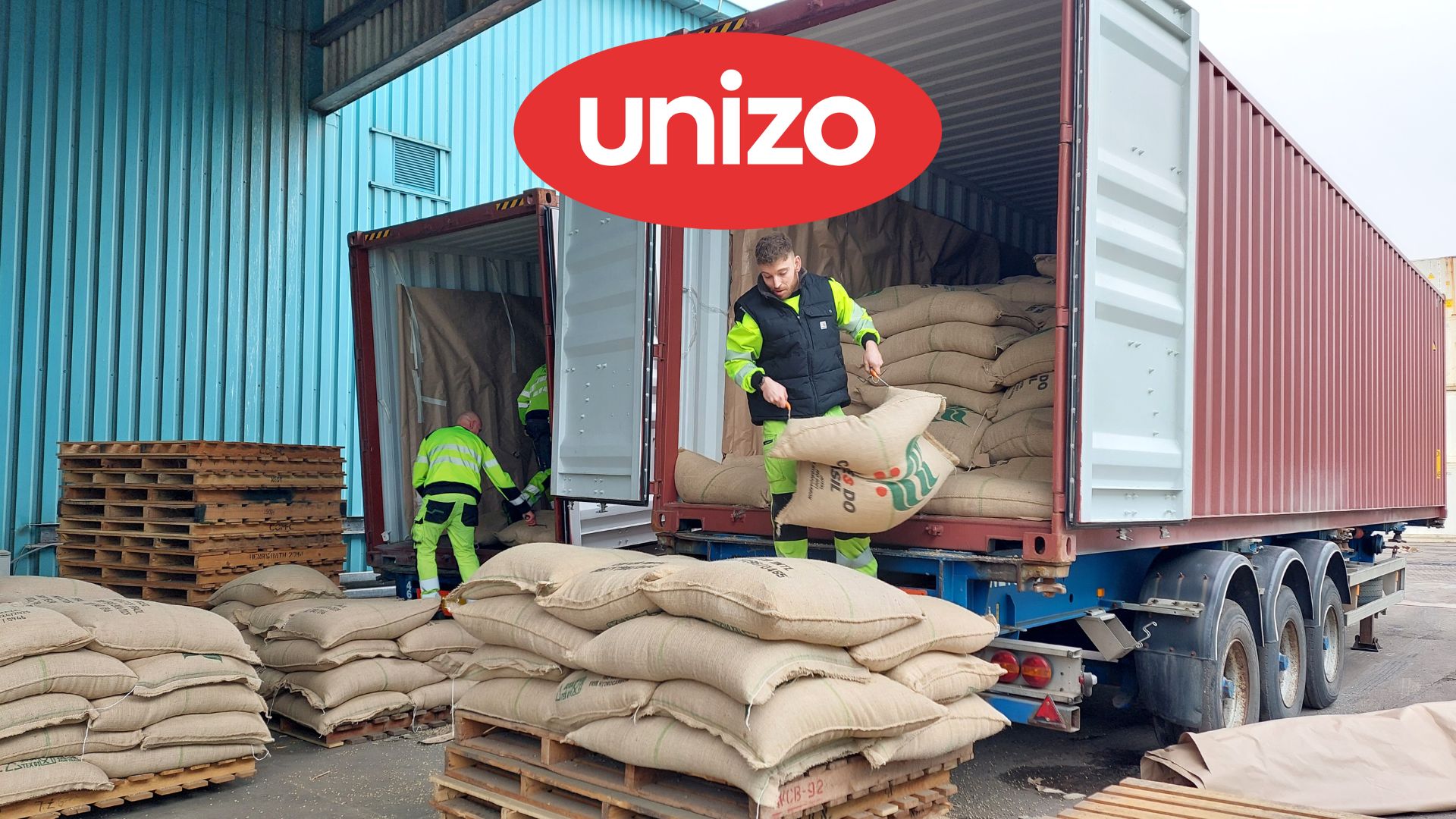
When you think of coffee beans, you might picture a steaming cup on the kitchen table. In the Port of Antwerp, however, those same beans represent trucks, warehouses, logistics planning and international trade. Together with cocoa, metals and other raw materials, they form the daily working environment of Commodity Centre Belgium.
For more than twenty years, the company has been an established player in the global commodities sector. Operating from Antwerp, Commodity Centre provides storage, handling and logistical monitoring services for a wide range of products to customers around the world. Co-Director, Tamara Tanghe has played a key role in the company’s expansion over the past thirteen years. In a sector where volumes and transport efficiency are critical, well-considered decisions made today determine success tomorrow. It was this conviction that led Commodity Centre to join UNIZO’s sustainability programme.
Sustainability as a strategic choice
This forward-looking mindset is also reflected in the company’s growth strategy. The acquisition of businesses such as Waagnatie and, more recently, the transport company Goossens, fits within a carefully considered approach aimed at gaining greater control over logistics and transport, improving efficiency and shortening supply chains. By integrating activities and managing them in-house, Commodity Centre Belgium is not only strengthening its operational position but also managing resources, transport flows and environmental impact more consciously. Growth and sustainability go hand in hand.
The company’s website now includes a dedicated sustainability section. This is no coincidence: customers, particularly larger organisations, are increasingly requesting transparency on CO₂ emissions and environmental impact.
“For cocoa and coffee tenders, the CO₂ footprint is becoming increasingly important,” says Tamara. “Even though, as an SME, we are not legally obliged to report on this, it is clear that without answers to these questions, opportunities are lost.”
Commodity Centre therefore provides insight into CO₂ footprints, with a strong emphasis on transport.
“In and around the Port of Antwerp, there are many choices to be made: truck or barge, shorter or longer routes. These decisions really matter, particularly when transporting goods to inland terminals or onwards to customers.”
The UNIZO programme: collaboration, not box-ticking
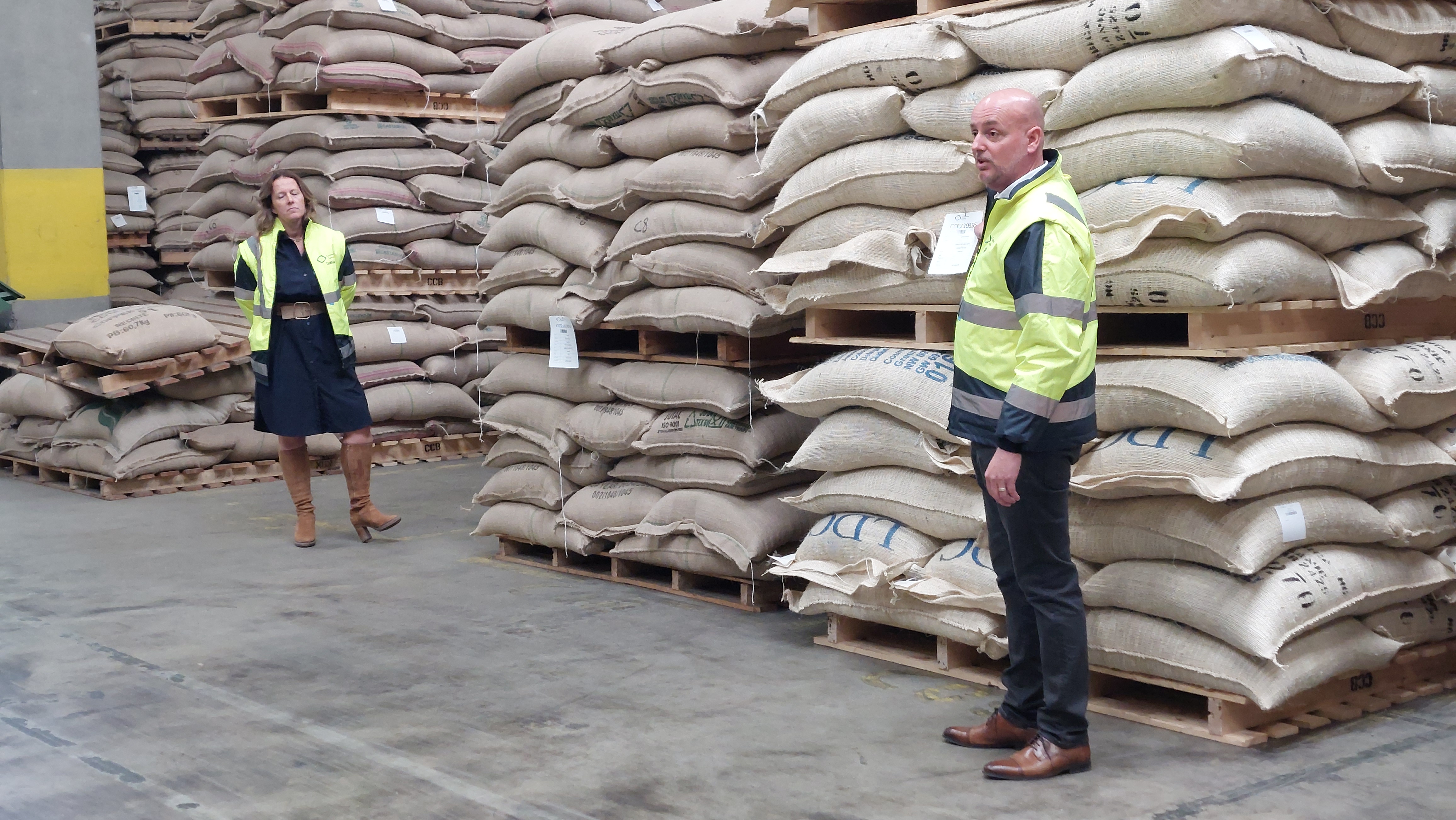
To further develop its sustainability strategy, CCB joined UNIZO’s mentoring programme, working alongside mentor Stéphane Vanden Broeck.
“In 2023, we were already CO₂-neutral and held certification to confirm this,” Tamara explains. “But we wanted to take a broader view: ESG, future resilience, and above all, an honest assessment of where we truly stand.”
The process began with the collection and analysis of data, followed by in-depth discussions about the company’s operations.
“Stéphane asks very specific questions. His expertise brings issues to light that you might not otherwise consider. It’s not about completing a checklist, but about meaningful dialogue in which he translates our insights into his assessment framework.”
This approach resulted in a comprehensive ESG report covering social, environmental and governance aspects.
“It not only shows where we are today, but also where we can improve. That makes it extremely valuable.”
Sustainability expert Stéphane Vanden Broeck adds:
“For a company that is already highly conscious of sustainability, the challenge lies in identifying the small details that may have been overlooked, and, above all, in defining the next steps. These refinements ensure that existing efforts and investments deliver maximum impact and often lead to greater market differentiation. I draw on circular economy principles and closely monitor upcoming regulations, helping companies respond proactively.”
Small steps, significant impact
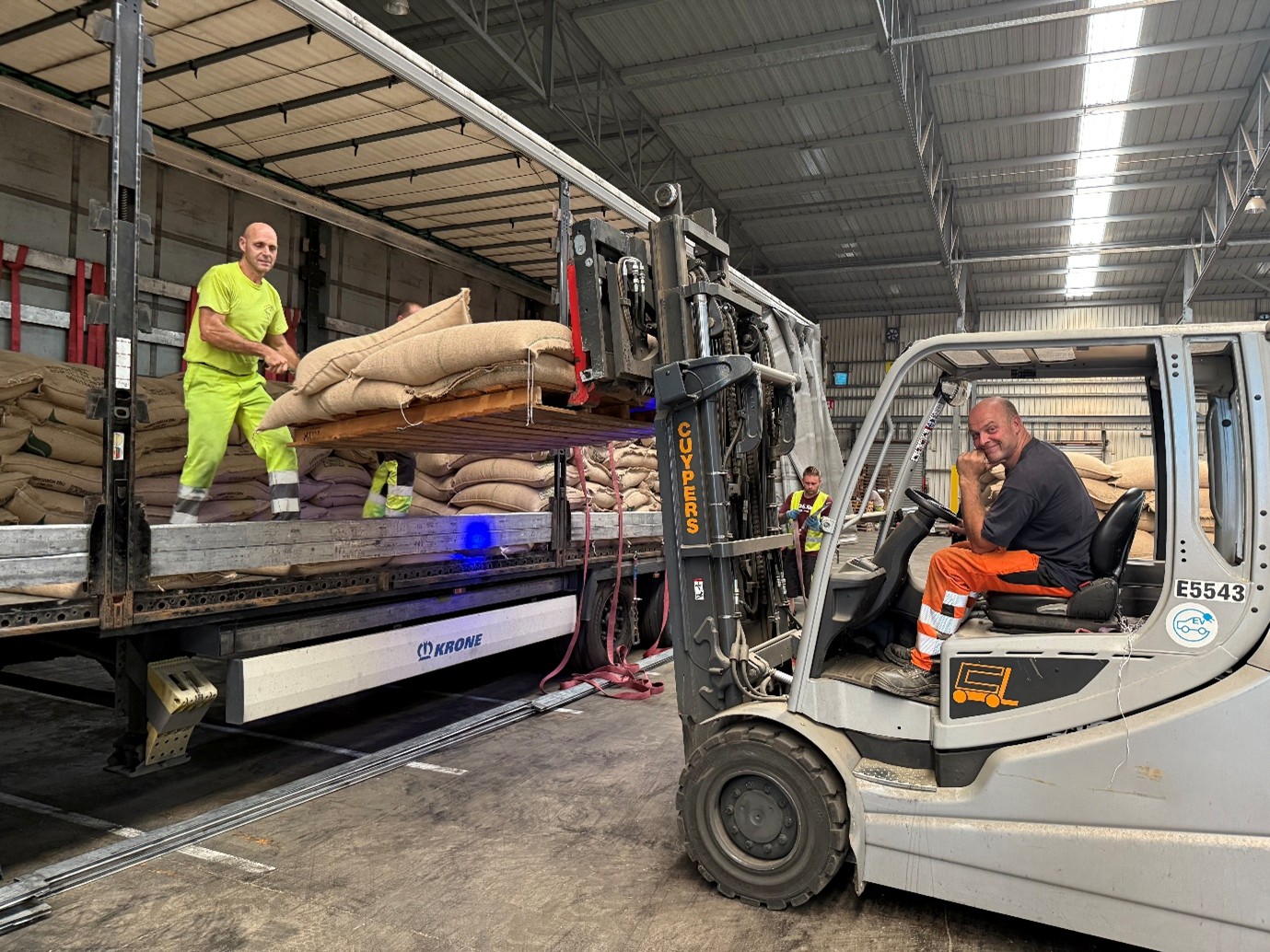
Although the final report is still under discussion, the process is already delivering tangible results. For example, Commodity Centre recently switched to biodiesel for its trucks and heavy machinery.
“The cost difference is limited, but the environmental impact is clear,” says Tamara.
A mentor who makes sustainability manageable
Tamara speaks with clear enthusiasm about Stéphane’s guidance.
“He has an enormous amount of knowledge and challenges you to think differently: even small changes can make a difference.”
His approach makes a complex and sometimes daunting subject more accessible.
“Sustainability remains a big topic,” she says with a smile, “but with his support, it becomes much easier to digest.”
The original article can be read in Dutch HERE
.jpg)