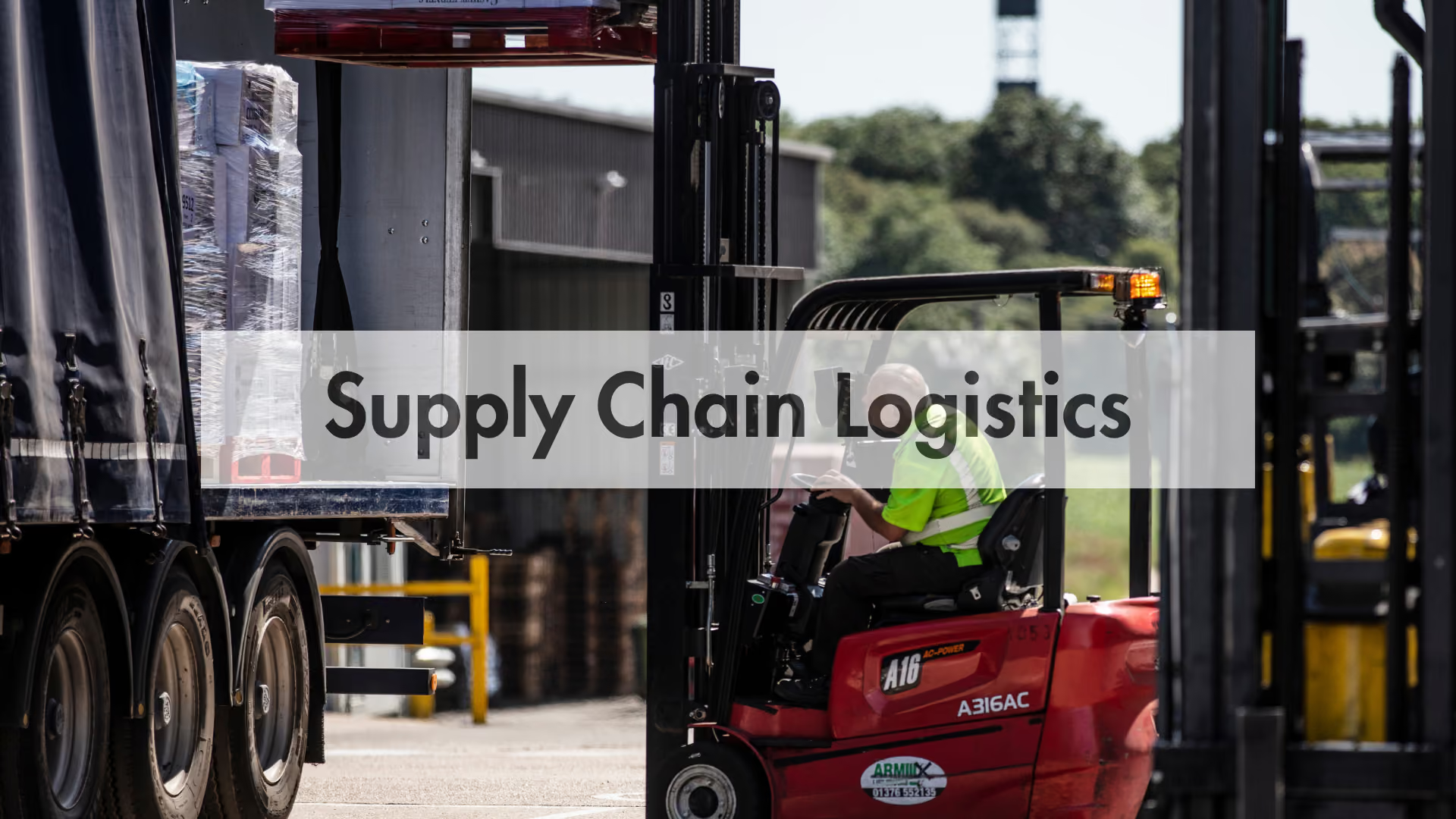
Stay informed on the issues shaping the supplements, nutraceuticals and functional foods industry, from product quality and storage to regulation, importing and supply chain resilience. We’ve selected useful resources from regulators, industry associations, scientific organisations and specialist publications.
Understanding Supplements & Nutraceuticals
What Are Food Supplements?
Publisher: European Food Safety Authority (EFSA)
EFSA provides a clear overview of food supplements, explaining what they are, the forms they take and the range of ingredients they can contain. The resource also highlights important considerations around safety, quality and ingredient levels, making it a useful starting point for businesses operating across the European supplements market.
Food Supplements Guidance
Publisher: Food Standards Agency (FSA)
Published in June 2026, this current FSA guidance explains what food supplements are, the different formats in which they are sold and common product categories. It also covers responsible purchasing, safety and potential issues with products. A useful reference for businesses wanting an up-to-date UK perspective on the supplement category.
Food Supplements in the European Union
Publisher: European Commission
The European Commission outlines the regulatory framework governing food supplements across the EU. The resource explains how supplements are defined, the rules surrounding vitamins and minerals, permitted sources and national notification requirements. It provides valuable context for businesses manufacturing, importing, distributing or selling supplements within European markets.
Explore the European Commission guidance
2026 Nutraceutical & Supplement Trends
Publisher: NutraIngredients
NutraIngredients' coverage provides a useful window into the issues currently shaping the wider nutraceutical industry, from microbiome science and longevity to new product development and evolving consumer demand. Its 2026 awards coverage highlights areas attracting significant industry attention and provides useful context for businesses planning future products and strategies.
Discover the latest industry trends
Storage, Stability & Shelf Life
Improving Stability of Probiotic Supplements: Practical Challenges and Solutions for Formulation and Manufacturing
Publisher: Nutraceutical Business Review
Probiotic supplements present particular stability challenges because live microorganisms must remain viable throughout manufacturing and shelf life. This article examines how formulation, blending, powder flow, compression and packaging can influence stability and product performance, offering useful insight into why environmental and handling conditions matter for sensitive nutraceutical products.
Read the article on probiotic stability
Dietary Supplement Storage Issues: Temperature Control
Publisher: NSF – The Public Health & Safety Organization
Temperature and humidity excursions can affect the quality, consistency and shelf life of supplements and ingredients. NSF's guidance explains the causes and potential consequences of storage excursions and explores temperature mapping, monitoring, risk management and vendor qualification. It is particularly relevant for businesses evaluating how their products should be stored and managed.
Stability Testing for Shelf Life Determination of Supplements
Publisher: International Alliance of Dietary / Food Supplement Associations (IADSA)
IADSA's technical guidance explains how scientifically based stability studies can be used to assess the stability and potential shelf life of supplements. It considers the key factors involved in designing stability studies and provides useful background for manufacturers and supply-chain partners responsible for maintaining product quality throughout its intended shelf life.
Explore supplement stability testing
Shelf-Life Recommendations for Supplements
Publisher: International Alliance of Dietary / Food Supplement Associations (IADSA)
Shelf life is closely connected to maintaining product specifications and potency over time. IADSA's guidance examines the factors that can influence supplement shelf life, the parameters that should be considered during testing and the data manufacturers may need when establishing appropriate shelf-life dates for finished products.
Learn more about the IADSA recommendations about shelf-life
Current Good Manufacturing Practice: Holding & Distributing
Publisher: U.S. Food & Drug Administration (FDA)
FDA guidance provides useful insight into the requirements surrounding the holding and distribution of dietary supplements. It specifically addresses appropriate temperature, humidity and light conditions, as well as protection against contamination, deterioration and product mix-ups. Although US-focused, the principles offer useful international context for supplement storage and distribution.
Explore supplement holding requirements - read the FDA guidance
Quality, GMP & Product Integrity
The Role of Traceability in the Nutraceutical Supply Chain
Publisher: Nutraceutical Business Review
As the nutraceutical sector expands, traceability has become increasingly important in protecting products from counterfeiting, diversion and grey-market activity. This article examines how digital traceability can help businesses follow products through the supply chain and strengthen transparency, security and consumer confidence - particularly as nutraceutical distribution becomes increasingly global and complex.
Explore the importance of supply-chain traceability
Q&A: Moisture and Odour Management
Publisher: Tablets & Capsules
Moisture can have a significant impact on the quality, efficacy and shelf life of pharmaceutical and nutraceutical products. This technical Q&A explores environmental management within packaging, including moisture and odour control, and considers how appropriate packaging solutions can help protect sensitive products from environmental factors that could otherwise affect product performance.
Read the moisture and odour management Q&A
From Soil to Supplement: Preventing Bacterial Contamination in Plant-Based Nutraceuticals
Publisher: Nutraceutical Business Review
Plant-based ingredients can introduce additional microbial risks into nutraceutical products. This article examines the potential for bacterial contamination in botanical and plant-derived supplements and explains why proactive controls are needed from raw-material sourcing through formulation and production. It provides a useful perspective on maintaining product safety and quality throughout the supply chain.
Read the article on microbial safety
Dietary Supplement Verification Program
Publisher: United States Pharmacopeia (USP)
USP's Dietary Supplement Verification Program demonstrates how independent third-party verification can support supplement quality. The programme includes facility audits, review of quality-control and manufacturing documentation, laboratory testing and ongoing product testing. It provides a useful overview of the systems businesses can use to demonstrate consistency and confidence in finished products.
Understand third-party supplement verification
Current Good Manufacturing Practice for Dietary Supplements
Publisher: U.S. Food & Drug Administration (FDA)
FDA's comprehensive CGMP guidance covers the quality systems that apply to supplement manufacturing, packaging, labelling, holding and distribution. It also addresses batch records, testing, traceability, complaints and returned products. For businesses operating internationally, it provides a valuable reference point for understanding the breadth of controls involved in supplement quality management.
Building Coherence in GMP Frameworks for Supplements
Publisher: International Alliance of Dietary / Food Supplement Associations (IADSA)
Different markets can have different regulatory requirements, but many supplement GMP systems share common principles. IADSA's comparative work examines GMP frameworks across several major international markets, identifying areas of alignment and helping businesses understand the common foundations of quality and consumer safety across the global supplement industry.
Inside Nature's Way's Commitment to Innovation and Quality
Publisher: NutraIngredients
This NutraIngredients feature provides an inside look at how a major supplement brand approaches innovation and quality assurance. It covers product development, delivery formats, testing laboratories and the systems supporting quality. It offers a useful real-world perspective on how quality considerations extend beyond formulation into facilities, testing and operational processes.
Subscribe to NutraIngredients to see how quality is managed in practice.
The Case for Farm-to-Extract Traceability
Publisher: Nutraceutical Business Review
Curcumin provides a useful example of why traceability and quality assurance need to extend back to the source of an ingredient. This article explores the risks created when raw materials pass through multiple supply-chain stages before extraction, including adulteration and limited visibility. It makes a strong case for greater transparency and control from origin through to finished ingredient.
Explore farm-to-extract traceability
Regulation, Labelling & Importing
Nutrition, Health Claims and Supplement Labelling
Publisher: GOV.UK
UK businesses manufacturing, importing or selling food supplements must meet specific requirements around labelling, nutrition information and health claims. This GOV.UK resource explains the rules that apply to supplements and other fortified foods, including restrictions around disease claims. It is a useful reference for businesses placing products on the UK market.
Check UK labelling and claims requirements
Health Claims
Publisher: European Food Safety Authority (EFSA)
Health claims are an important consideration when developing, marketing and distributing supplements in Europe. EFSA explains the difference between nutrition and health claims and the scientific assessment behind authorised claims. The resource provides useful context for businesses navigating evidence, product communication and the requirements surrounding claims made about foods and ingredients.
Explore EFSA's health-claims guidance
Classifying Vitamins, Supplements and Herbal Medicines for Import and Export
Publisher: HM Revenue & Customs (HMRC)
Correct classification is an important part of international trade. HMRC's guidance explains how vitamins, food supplements, herbal preparations and related products are classified for import and export, taking account of factors such as their purpose, contents and presentation. This can be particularly useful when determining the appropriate customs classification for products.
Check how your product should be classified
Food Supplements: UK Business Guidance
Publisher: GOV.UK
This UK Government resource provides practical information for businesses selling food supplements, including registration, supplier responsibilities, record keeping and product safety. It reinforces the importance of being able to identify where products have come from and who they have been supplied to - key considerations for businesses managing stock across the supply chain.
Review UK supplement business requirements
Supply Chain, Sourcing & Industry Trends
Navigating Nutritional Supplement Industry Supply Chain Management
Publisher: Nutrition Industry Executive
This article looks at the practical challenges of managing a modern nutritional supplement supply chain, including supplier volatility, tariffs, sourcing and changing market conditions. It highlights the importance of planning, appropriate partnerships and contingency strategies to manage disruption across a complex network of suppliers, manufacturers, brands and other stakeholders.
Read the supply-chain management article
Tariffs, Freight and Geopolitics Are Squeezing the Supplement Supply Chain
Publisher: NutraIngredients
The global supplement supply chain is facing increasing uncertainty from geopolitical tensions, tariffs, freight disruption and changing energy costs. This recent NutraIngredients feature explores how these pressures are affecting ingredient supply, particularly botanicals, and highlights the growing importance of resilience and supply-chain visibility for supplement businesses.
Explore the latest supply-chain challenges
Supplement Industry COOs Talk Supply Chain Resilience
Publisher: NutraIngredients
Senior operations leaders from major supplement companies discuss how businesses are responding to sourcing volatility, tariffs, regulatory change and increasingly complex sales channels. The article highlights the importance of resilient supply chains, trusted partners, disciplined growth and technology - all increasingly important considerations as supplement businesses scale internationally.
Subscribe to NutraIngredients and discover how industry leaders are building resilience
Climate-Resilient Ingredients: Safeguarding Supply Chains for the Future
Publisher: Nutrition Industry Executive
Climate change is increasingly becoming a supply-chain issue for nutraceutical companies, particularly those dependent on agricultural and plant-based ingredients. This article explores how extreme weather, changing growing conditions and resource pressures can affect sourcing, quality and continuity of supply, and why ingredient resilience is becoming an increasingly important business consideration.
Explore climate-resilient ingredient supply chains
The Importance of Diversifying Supply Chains Amid Geopolitical Crisis
Publisher: NutraIngredients
Supplement companies depend on globally distributed sources of ingredients, making supply-chain concentration an important business risk. This NutraIngredients feature explores why diversification is becoming increasingly important, with discussion around transparency, quality, pricing volatility and supplier relationships. It provides useful perspective for businesses looking to build more resilient sourcing and distribution strategies.
Explore supply-chain diversification strategies
Fish Oil Omega-3: Supply Chain Uncertainty and Cost Pressures
Publisher: NutraIngredients
Omega-3 provides a useful example of how environmental events, raw-material availability, pricing and geopolitical pressures can affect supplement supply chains. This article examines the challenges facing the fish-oil sector and the industry's efforts to improve resilience through alternative sources, supply planning and greater diversification of raw-material inputs.
Subscribe to NutraIngredients and explore the challenges facing omega-3 supply

Regulatory & Compliance Resources
Understanding the regulatory landscape is an important part of bringing health and nutrition products to market. We've selected official UK and European resources covering food supplements, labelling, claims, Good Manufacturing Practice and Good Distribution Practice.
UK Government – Food supplements guidance
This GOV.UK resource provides current guidance on food supplements in the UK, covering what constitutes a supplement, permitted ingredients, safety considerations and regulatory requirements. It is a useful starting point for businesses manufacturing, importing, distributing or selling food supplements in the UK.
Food supplements guidance (GOV.UK)
UK Government – Food supplement legislation and guidance notes
This guidance explains the UK rules governing food supplement use, composition and labelling. It provides useful information on what must appear on supplement labels, required warnings and other regulatory considerations, helping businesses ensure their products meet UK requirements before being placed on the market.
Food supplement use and labels (GOV.UK)
UK Government – Guidance notes on legislation implementing Directive 2002/46/EC
These guidance notes explain the legislation governing food supplements originally established under European Directive 2002/46/EC. They provide detailed information on composition, permitted vitamins and minerals, labelling and related requirements, making them a useful technical reference for businesses operating across the UK and European supplement markets.
Guidance notes on legislation implementing Directive 2002/46/EC
UK Government – Food supplements: what businesses need to know
This business-focused guidance provides practical information for companies placing food supplements on the UK market. It covers responsibilities around safety, composition, labelling, record keeping, registration and enforcement, helping manufacturers, importers, distributors and retailers understand the regulatory requirements that apply to their products.
Food supplements (business guidance)
UK Government – Nutrition, health claims and supplement labelling
This GOV.UK resource explains UK requirements for nutrition and health claims, food labelling and supplement information. It is particularly useful for businesses developing packaging and marketing materials, helping them understand which claims can be made and what mandatory information must accompany food supplements and other nutrition products.
Food labelling, nutrition and supplement guidance
MHRA – Good Manufacturing Practice (GMP) and Good Distribution Practice (GDP)
The Medicines and Healthcare products Regulatory Agency (MHRA) provides guidance on Good Manufacturing Practice and Good Distribution Practice for medicinal products. While primarily relevant to medicines rather than food supplements, it is an important reference for businesses handling regulated health products and understanding the standards expected for controlled manufacturing and distribution environments.
Medicines: Good Manufacturing Practice and Good Distribution Practice
European Medicines Agency (EMA) – Good Distribution Practice (GDP)
The European Medicines Agency provides guidance on Good Distribution Practice for medicinal products within the European Union. It covers areas including storage, transportation, quality systems, documentation and distribution controls. It is a useful reference for businesses wanting to understand the principles behind maintaining product quality throughout a regulated distribution chain.
Good Distribution Practice (EMA)
European Medicines Agency (EMA) – GMP & GDP Questions and Answers
This EMA resource addresses practical questions around Good Manufacturing Practice and Good Distribution Practice for medicinal products. It provides clarification on topics including quality systems, responsibilities, storage, transportation and distribution. For businesses operating in regulated health-product supply chains, it offers useful insight into European compliance expectations.
Guidance on GMP and GDP: Questions and Answers
European Commission – Good Manufacturing and Distribution Practices
The European Commission provides the legislative and regulatory framework for Good Manufacturing Practice and Good Distribution Practice covering medicinal products in the EU. Its guidance addresses manufacturing quality, storage, transportation and distribution, providing an authoritative reference for businesses involved in regulated pharmaceutical and healthcare supply chains.
European Commission GMP & GDP guidance

Industry Bodies
The UK Food Standards Agency
The FSA provides authoritative guidance on food safety, standards and regulation. Its resources cover food supplements, ingredients, labelling, safety and compliance, making it a valuable reference for businesses manufacturing, importing, storing or selling health and nutrition products in the UK.
BRCGS
BRCGS develops globally recognised standards for food safety, quality, packaging, storage and distribution. Its standards and certification frameworks help businesses understand best practice, manage risk and demonstrate robust quality and safety systems across their supply chains, making it particularly relevant to manufacturers, suppliers and logistics providers.
UK Warehousing Association
The UK Warehousing Association represents the UK warehousing sector and provides industry insight, guidance and resources covering storage, distribution, regulation, technology and operational best practice. It is a useful reference for businesses looking to understand developments and standards affecting professional warehousing and supply-chain operations.
UK Warehousing Association (UKWA)
Cold Chain Federation
The Cold Chain Federation represents businesses involved in temperature-controlled storage and distribution across the UK. Its resources provide guidance and industry insight on temperature management, food safety, regulation, sustainability and cold-chain best practice, helping businesses understand the requirements for products requiring controlled environmental conditions.
Institute of Food Science & Technology
IFST is the UK’s professional body for food science and technology, providing independent information and expertise across food safety, quality, processing, ingredients and regulation. Its publications and resources can help businesses understand the science and technical considerations behind food and nutrition products.
Institute of Food Science & Technology (IFST)
Chartered Institute of Logistics and Transport
CILT UK is the professional body for logistics and transport, providing knowledge, research, training and industry insight across supply-chain management. Its resources cover warehousing, distribution, transport, sustainability and emerging industry trends, helping businesses understand the wider logistics environment in which their products move.
Chartered Institute of Logistics and Transport (CILT UK)
International Alliance of Dietary / Food Supplement Association
IADSA is an international association representing the food supplement industry and providing information on science, safety, quality and regulation. Its resources offer valuable insight into supplement standards, stability, good manufacturing practice and regulatory developments across global markets, supporting businesses operating internationally.
International Alliance of Dietary / Food Supplement Association (IADSA)
NSF – The Public Health & Safety Organization
NSF is an independent global organisation providing standards, testing, auditing and certification services focused on public health and safety. Its resources cover areas including dietary supplements, ingredients, quality and storage, helping businesses understand recognised approaches to product integrity, safety and supply-chain management.
NSF – The Public Health & Safety Organization
European Food Safety Authority (EFSA)
EFSA provides independent scientific advice on food and feed safety within the European Union. Its work covers food supplements, ingredients, novel foods, contaminants, nutrition and health claims. Its scientific opinions and guidance are valuable resources for businesses seeking to understand safety and regulatory requirements across European markets.
European Food Safety Authority (EFSA)
United States Pharmacopeia (USP)
USP is an independent scientific organisation that develops quality standards for medicines, foods, ingredients and dietary supplements. Its resources cover testing, verification, identity, purity and quality, providing businesses with useful information on maintaining consistent product quality and strengthening confidence throughout the health and nutrition supply chain.
United States Pharmacopeia (USP)

Industry News & Market Intelligence
NutraIngredients Europe
NutraIngredients Europe is a specialist B2B publication covering the nutrition and supplements industry. It provides news, analysis and expert insight on ingredients, science, regulation, product development, consumer trends and supply chains, helping industry professionals stay informed about developments affecting the European health and nutrition market.
NutritionInsight
NutritionInsight is a B2B publication covering nutrition, health and wellness ingredients and products. Its content explores scientific developments, ingredient innovation, market trends, sustainability and regulatory issues, providing useful insight for businesses involved in functional foods, dietary supplements, nutraceuticals and the wider nutrition industry.
FoodNavigator
FoodNavigator is a global B2B food industry publication covering food and beverage innovation, ingredients, nutrition, regulation, sustainability and consumer trends. Its content can help supplement and functional food businesses understand broader developments in food science and the changing market for health-focused products.
NutraCosmetics
NutraCosmetics focuses on the intersection between nutrition, beauty and health, covering nutricosmetics, beauty-from-within products, ingredients, science and market developments. Its content is particularly relevant to businesses working with supplements and functional products positioned around skin, hair, beauty, healthy ageing and overall wellness.
Nutraceutical Business Review
Nutraceutical Business Review is a specialist B2B publication covering the nutraceutical, dietary supplement and functional food sectors. Its content spans ingredients, formulation, manufacturing, packaging, quality, regulation and industry trends, providing practical insight for businesses involved in developing and bringing nutrition products to market.
Nutraceutical Business Review
Nutrition Industry Executive
Nutrition Industry Executive is a B2B publication serving the dietary supplement, functional food and nutrition industries. It covers ingredients, formulation, manufacturing, quality, regulation, supply chains and market trends, offering practical industry insight for manufacturers, suppliers, brand owners and other businesses operating across the nutrition sector.
Tablets & Capsules
Tablets & Capsules is a specialist publication covering the formulation, manufacture, processing and packaging of tablets, capsules and other solid dosage products. Its technical content is relevant to supplement and nutraceutical businesses seeking insight into manufacturing processes, ingredients, equipment, quality, packaging and production challenges.