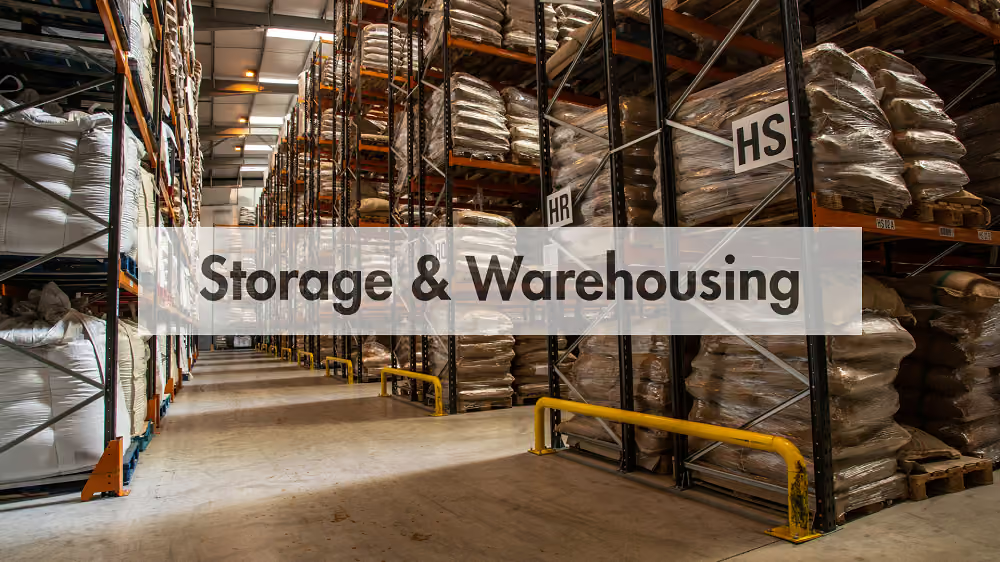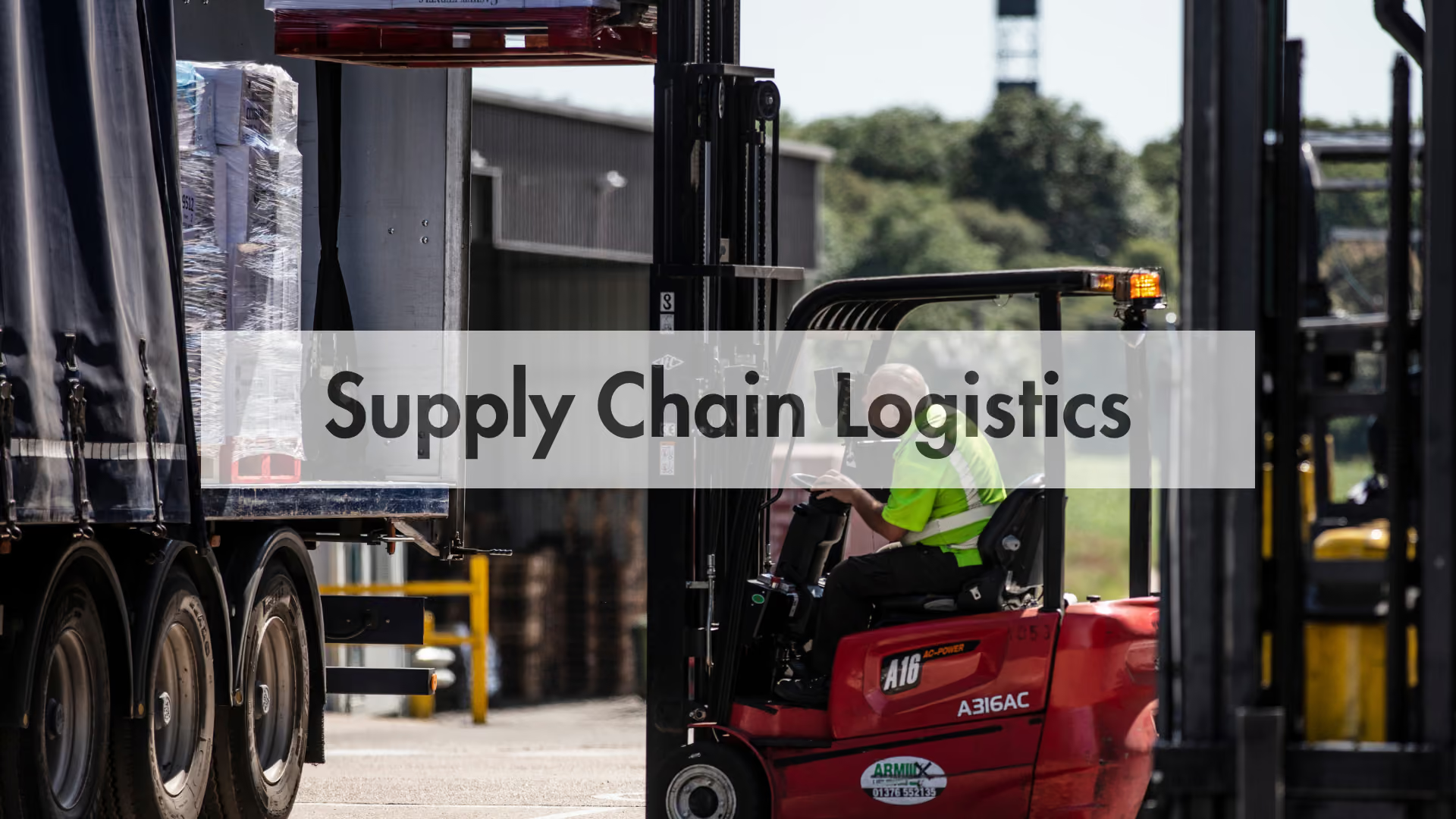
Bringing a supplement to market involves far more than manufacturing a great product. Every stage of the supply chain, from sourcing ingredients and importing finished goods to warehousing, fulfilment and final delivery, plays an important role in maintaining product quality, regulatory compliance and customer satisfaction.
Unlike many consumer goods, supplements often have strict storage requirements, finite shelf lives and complete traceability obligations. Whether supplying major retailers, independent health stores, pharmacies or consumers through e-commerce channels, brands need confidence that their products are being handled correctly throughout their journey.
At Commodity Centre, we understand that logistics is not simply about moving pallets from one location to another. It's about protecting your products, your reputation and your customers. This guide explains the key stages of the supplement supply chain and the considerations that help businesses build a resilient, efficient and compliant logistics operation.
Understanding the supplement supply chain
A supplement's journey may begin thousands of miles away from the consumer. Raw ingredients may be sourced from Asia, Europe or North America before being blended, manufactured and packaged in specialist production facilities. Finished products are then shipped internationally, cleared through customs, stored within accredited warehouses and distributed to retailers or directly to consumers.
Every transfer between manufacturers, transport providers, ports, warehouses and distribution networks presents an opportunity for delay, damage or loss of traceability if processes are not carefully managed.
An effective supply chain connects every stage together, ensuring products move efficiently whilst maintaining complete visibility and control from origin to destination.
Importing supplements into the UK
Many supplement brands source ingredients or finished products from overseas manufacturers. Importing these goods successfully requires careful planning and an understanding of customs procedures, documentation requirements and border controls.
The import process typically includes shipping, customs declarations, duty and VAT management, port health requirements where applicable and onward transportation to a warehouse. Delays at any stage can affect product availability, cash flow and customer service.
Working with experienced logistics providers helps ensure shipments are collected promptly from port, documentation is managed efficiently and products are received into storage without unnecessary delays.
For businesses importing regularly, bonded warehousing can also provide valuable flexibility by allowing customs duties to be deferred until products enter the domestic market.
International freight
Choosing the right transport method is an important commercial decision. Sea freight remains the most cost-effective option for large volumes, whilst air freight provides faster transit times for urgent or high-value shipments. Road freight plays a key role in European distribution and offers flexibility for cross-border deliveries.
The right solution depends on a range of factors, including product value, lead time, inventory strategy and customer expectations.
Many businesses combine multiple transport methods throughout the year, balancing cost, speed and supply chain resilience.
Container logistics
The journey doesn't end when a shipping container reaches port. In many ways, this is where specialist logistics begins.
Containers must be collected within agreed timescales, transported safely to the warehouse and unloaded using appropriate handling procedures. Goods are checked for damage, quantities verified and packaging inspected before inventory is accepted into stock. Where necessary, products may be repalletised, rewrapped or reworked to meet customer specifications before entering storage.
Efficient container management helps businesses avoid unnecessary port charges whilst ensuring products become available for sale as quickly as possible.
Bonded warehousing
For importers, bonded warehousing can provide significant commercial advantages. Products may be stored under customs control without immediately paying import duties and taxes, improving cash flow and providing greater flexibility for businesses trading internationally.
Bonded storage is particularly valuable for companies importing large volumes, supplying multiple international markets or holding stock before final distribution.
When combined with efficient customs processes and inventory management, bonded warehousing becomes an important part of an agile global supply chain.
Receiving goods
Every successful supply chain begins with an efficient goods-in process. Upon arrival at the warehouse, deliveries should be booked, inspected and verified before being accepted into inventory. Quantities are checked against shipping documentation, packaging is inspected for visible damage and product information such as batch numbers and expiry dates is recorded.
Accurate receiving procedures establish the foundation for complete traceability throughout the remainder of the supply chain.
Quality inspections
Quality assurance begins long before products reach consumers. Routine inspections during receipt help identify damaged cartons, compromised pallets, labelling issues or other discrepancies before products enter storage.
Early identification of potential issues reduces the risk of unsuitable products entering the supply chain and enables corrective action to be taken quickly.
Some businesses also require sampling, photographic reporting or additional customer-specific inspections as part of their quality management processes.
Inventory management
Modern supplement supply chains rely on accurate, real-time inventory information. Warehouse Management Systems provide visibility of stock levels, pallet locations, batch numbers and expiry dates, allowing businesses to monitor inventory remotely and make informed purchasing and distribution decisions.
Accurate inventory management reduces stock discrepancies, improves forecasting and helps ensure products are available when customers need them.
Order fulfilment
Today's supplement brands often serve multiple sales channels simultaneously. A single warehouse may dispatch full pallets to retailers, mixed cases to wholesalers and individual orders directly to consumers through e-commerce platforms.
An efficient fulfilment operation enables businesses to scale without compromising customer service, whether processing a handful of daily orders or managing thousands of shipments during seasonal peaks.
Amazon FBA preparation
Many supplement brands choose to sell through Amazon, creating additional packaging and labelling requirements before products can enter Amazon's fulfilment network.
Preparation may include applying compliant labels, pallet configuration, carton checks and ensuring shipments meet Amazon's latest operational requirements.
Accurate preparation reduces the likelihood of rejected deliveries and helps products become available for sale without unnecessary delays.
Pick and pack services
As direct-to-consumer sales continue to grow, pick and pack services have become an essential part of supplement logistics. Orders may range from a single bottle of vitamins to large subscription boxes containing multiple products. Accuracy, speed and presentation all contribute to the customer experience.
Flexible pick and pack services also support promotional campaigns, influencer marketing, product launches and seasonal demand peaks without requiring brands to invest in their own warehouse infrastructure.
Repacking and contract packing
Product packaging often changes throughout its lifecycle. Businesses may require promotional sleeves, multilingual labels, retail-ready packaging or replacement cartons following transport damage.
Contract packing services allow these activities to be completed within the warehouse, reducing transport costs and shortening lead times.
Keeping value-added services under one roof also minimises handling and maintains product traceability.
Stock rotation
Effective stock rotation is essential for products with defined shelf lives. Many supplement warehouses operate using First In, First Out (FIFO), ensuring products with the earliest expiry dates are dispatched first.
This approach helps reduce waste, maintains customer satisfaction and maximises the usable life of inventory.
Regular stock reviews and automated reporting also allow businesses to identify ageing inventory before it becomes a commercial issue.
Distribution throughout the UK and Europe
Once orders leave the warehouse, efficient distribution becomes the final link in the supply chain. Supplement brands often supply customers across multiple countries, each with different delivery expectations and regulatory considerations.
Working with established transport networks enables businesses to reach retailers, wholesalers and consumers throughout the UK and Europe quickly and reliably.
Flexible distribution solutions allow businesses to expand into new markets without developing their own transport infrastructure.
Customs and documentation
International trade depends on accurate documentation. Commercial invoices, packing lists, customs declarations and commodity codes all contribute to the smooth movement of goods across borders.
Errors or omissions can result in delays, additional costs and disruption to customer deliveries.
Experienced logistics providers work closely with freight partners and customs specialists to help businesses navigate these requirements efficiently.
Product recalls
Although rare, every supplement business should be prepared to manage a product recall. Comprehensive traceability systems allow affected batches to be identified quickly, isolated within the warehouse and removed from distribution where necessary.
Well-designed recall procedures help protect consumers, satisfy regulatory requirements and minimise disruption to the wider business.
Returns management
Not every product follows a one-way journey. Retail returns, damaged goods and customer returns all require careful assessment before decisions are made regarding rework, disposal or restocking.
A structured returns process helps maintain inventory accuracy whilst ensuring unsuitable products are prevented from re-entering the supply chain.
Technology and visibility
Modern logistics is increasingly driven by technology. Warehouse Management Systems, barcode scanning, real-time reporting and customer portals provide complete visibility of inventory throughout the supply chain.
Access to accurate information enables businesses to make faster decisions, improve customer service and respond more effectively to changing market conditions.
Sustainability in supplement logistics
Sustainability is becoming an increasingly important consideration for both brands and consumers. Efficient warehouse operations, consolidated transport, reduced packaging waste and investments in lower-carbon technologies all contribute towards reducing the environmental impact of the supply chain.
By improving operational efficiency, businesses can often reduce both costs and emissions at the same time.
Growing with your business
Logistics requirements evolve as supplement brands grow. A new business may begin with a small number of pallets and online orders before expanding into national retail distribution, international markets and multiple sales channels.
Choosing a logistics partner capable of scaling alongside your business helps avoid disruption whilst providing the flexibility needed to support future growth.
Choosing the right logistics partner
Selecting a logistics provider is about more than warehouse capacity. Look for a partner with experience handling food-grade products, robust quality systems, recognised accreditations and technology that provides complete visibility of your inventory.
The right provider should understand the operational challenges facing supplement businesses and be able to support every stage of the supply chain, from import and storage through to fulfilment and final delivery.
Bringing every stage together
The most successful supplement supply chains are built around visibility, consistency and trust. When transport, warehousing, inventory management and fulfilment work together seamlessly, brands benefit from greater efficiency, lower risk and improved customer satisfaction.
At Commodity Centre, we help supplement and nutraceutical businesses simplify complex supply chains through integrated logistics solutions designed to protect product quality from the moment goods arrive until they reach the end customer.